In this article
Most of us feel it without needing to explain it: a room with daylight and a view of trees feels better than one without. Biophilic design takes that instinct seriously. It is an approach to architecture that deliberately connects people with nature, not as decoration added at the end, but as part of how a building is planned.
What does “biophilic” mean?
“Biophilia” describes the human tendency to seek connection with nature and other living things. The idea was popularized by the biologist Edward O. Wilson in the 1980s, and it has since shaped a growing field of design. In architecture, biophilic design means bringing natural light, air, plants, water, natural materials and views into the everyday experience of a building.
The core principles
Daylight. Natural light that changes through the day is the foundation. Courtyards, skylights, deep window reveals and light wells can bring daylight into the center of a plan, not only its edges.
Visual connection to nature. Views of trees, sky and water, even from a single well-placed window, make interiors feel calmer and larger.
Living plants. Planting inside and around a home, from courtyard trees to planted balconies, softens hard surfaces and brings seasonal change into daily life.
Water. The sight and sound of water, from a pond to a shallow reflecting pool, adds calm and, in hot climates, a sense of coolness.
Natural materials. Timber, stone, brick, lime plaster and natural textiles age well and carry texture that people instinctively respond to.
Refuge and prospect. People feel comfortable when they are sheltered but can see out. A sheltered seat looking onto a garden is one of the oldest and best patterns in architecture.
Why it matters
Research in environmental psychology has linked contact with nature to lower stress, better mood and improved concentration. Beyond well-being, biophilic strategies often support good environmental design too: shade from planting, cooler outdoor spaces, better daylight and less reliance on artificial light.
Designing green homes for a hot, humid climate
In a tropical climate like Bangladesh, biophilic design is not only about beauty. It can make a home more comfortable, if it is detailed properly. Planted balconies and roof gardens in particular need careful thought:
- Structure: wet soil is heavy. Planters must be designed into the structure from the start, not added later.
- Soil depth: small shrubs need far less depth than trees. Match the planting to the space available.
- Waterproofing and drainage: every planter needs reliable waterproofing, a drainage layer and a clear route for overflow during heavy monsoon rain.
- Irrigation: simple drip irrigation keeps plants healthy through dry months and makes a green facade realistic to maintain.
- Plant choice: native and climate-suited plants survive better, need less care and support local wildlife.
- Access: every planter must be reachable for pruning and cleaning. A green facade that cannot be maintained will not stay green.
- Shade and ventilation: use deep overhangs, planting and cross ventilation together to keep homes cool naturally.
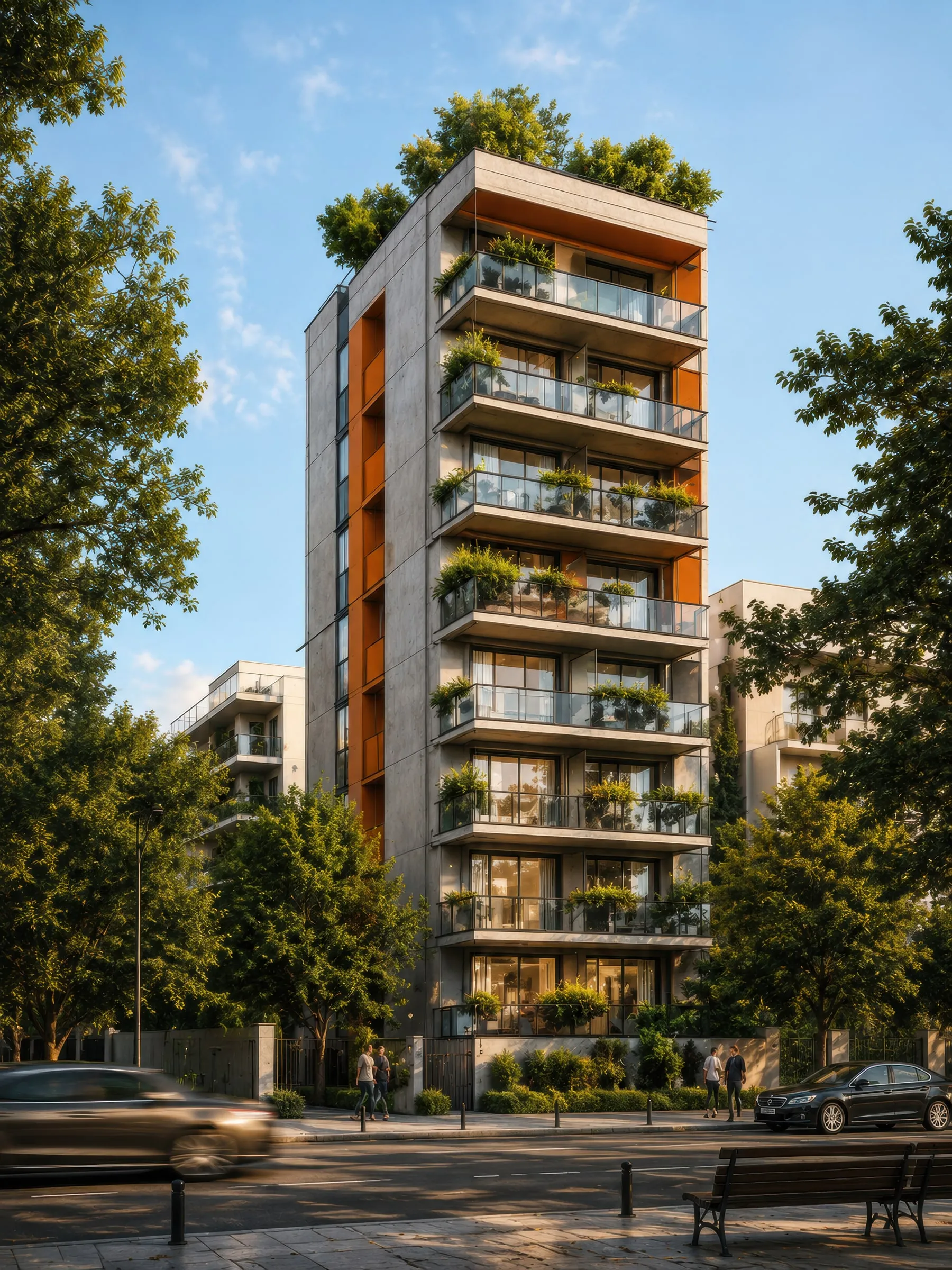
Biophilic ideas in my design studies
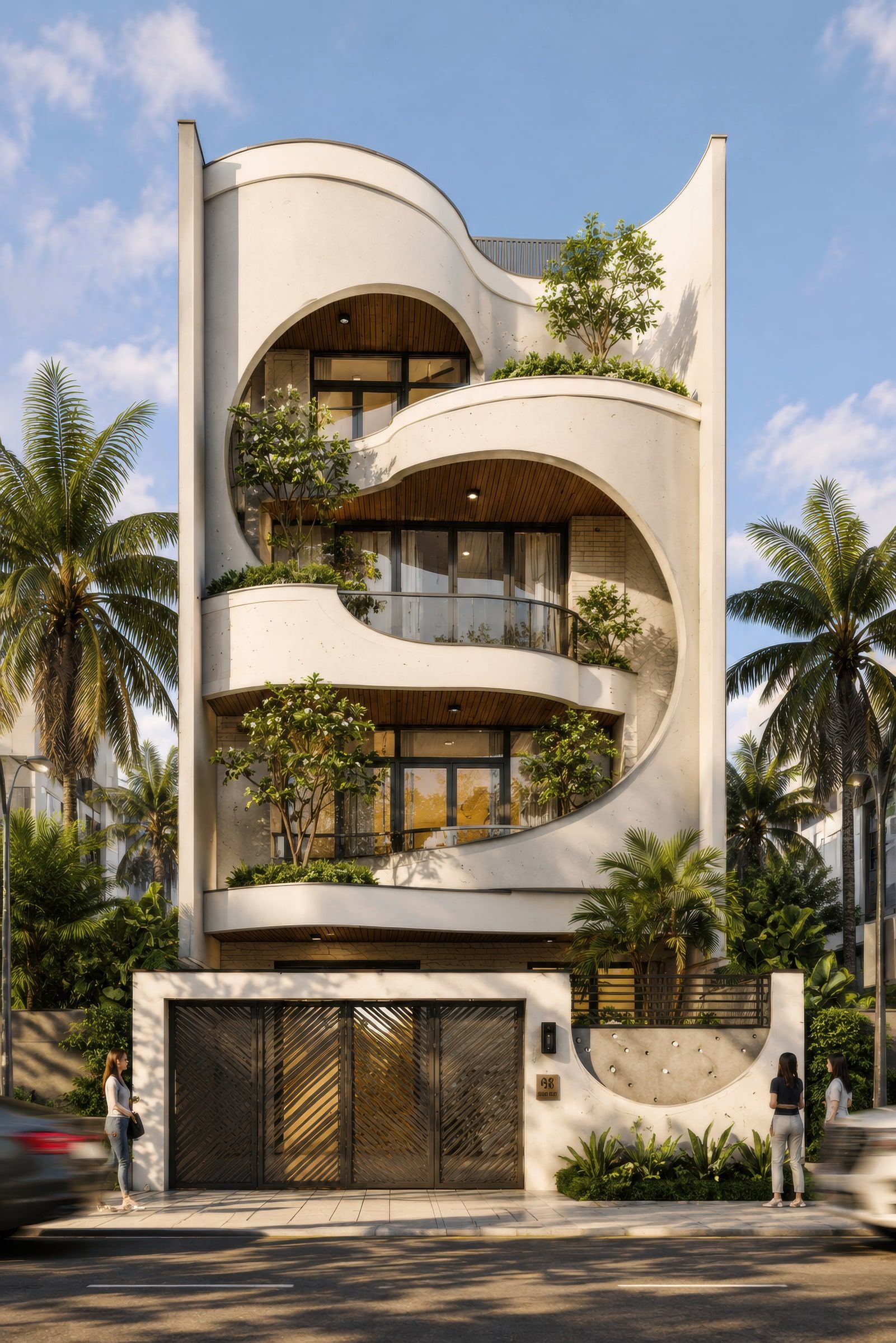
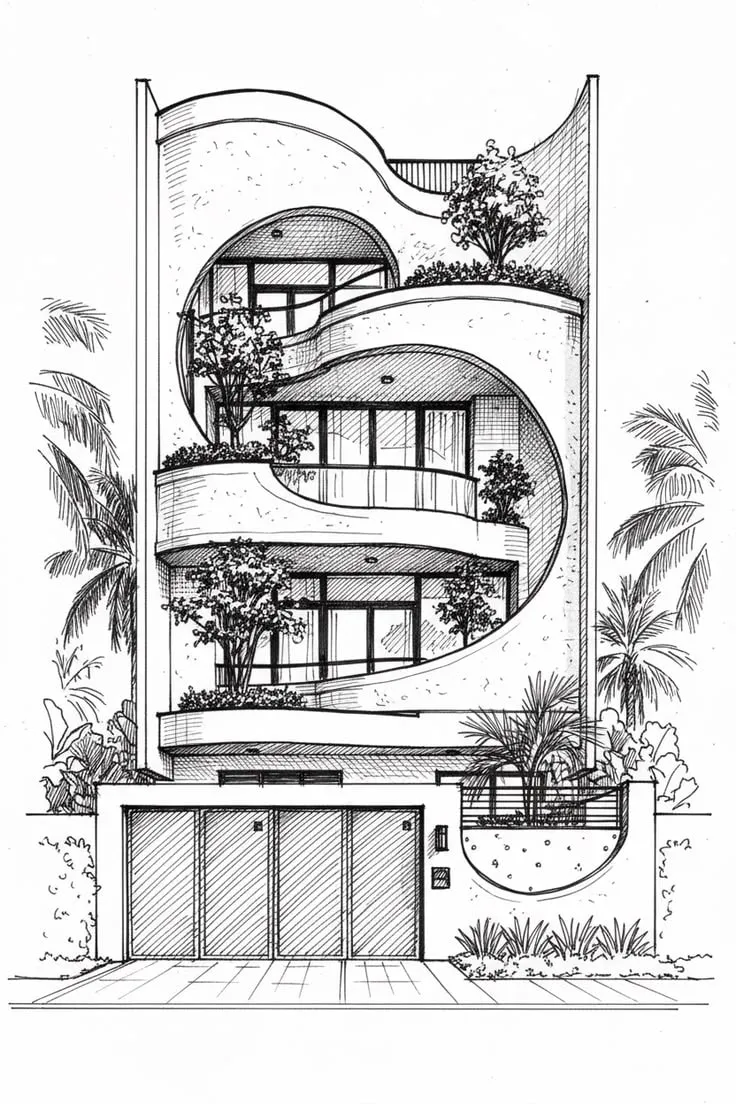
Several of my concept projects explore these ideas at different scales. The Biophilic Atrium Interior places an indoor garden and pond at the heart of a home under a glazed roof. The Curved Modern Residence wraps a four-story house in planted, sweeping balconies. The Whale-Shaped Café uses bamboo, timber and natural light to connect a hospitality space with its waterfront setting.
Start small
You do not need a courtyard or a roof garden to begin. Rearranging a room around a window view, adding a few well-chosen plants, choosing natural materials for surfaces you touch every day, or opening a stair to daylight can all make a noticeable difference.
If you would like to bring more daylight, planting and natural materials into a new home or renovation, get in touch to talk about your project.
Tags
Share